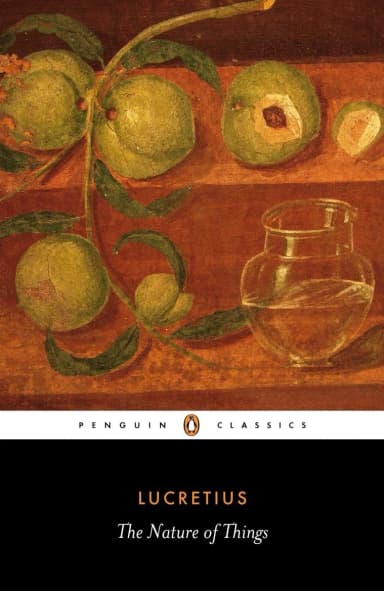
On the Nature of Things
LucretiusLost for a millennium and rediscovered in 1417.
“Death, therefore, is nothing to us.”
— Lucretius
Why It's Lindy
Lost for a millennium and rediscovered in 1417. Its atomic materialism prefigures modern physics in ways that are still astonishing. The Swerve by Greenblatt tells the remarkable story of its rediscovery.
About This Volume
An epic poem explaining Epicurean philosophy and the atomic theory of matter. Argues for a universe without divine intervention or fear of death.
Frequently Asked
Why should I read On the Nature of Things?
Lost for a millennium and rediscovered in 1417. Its atomic materialism prefigures modern physics in ways that are still astonishing. The Swerve by Greenblatt tells the remarkable story of its rediscovery.
What is On the Nature of Things about?
An epic poem explaining Epicurean philosophy and the atomic theory of matter. Argues for a universe without divine intervention or fear of death.