Skip to content
All Collections
Collection14 books

Science

The books in this collection represent science at its most durable: foundational ideas that not only shaped their own era but continue to define how we understand the natural world. Darwin's On the Origin of Species, Newton's Principia, and Euclid's Elements are not merely historical artifacts — they are still the clearest expositions of the ideas they describe. Reading primary sources in science is one of the most valuable intellectual exercises available, because it shows you how great discoveries were actually made, not how they are summarized in textbooks.

W

What Is Life?

Schrodinger's short but catalytic meditation on heredity, order, and the physical basis of life. Written for a general audience in 1944, it helped frame the central question that molecular biology would spend the next decades answering.

T

The Emperor's New Mind

Penrose's wide-ranging challenge to the claim that human consciousness can be fully explained as computation, drawing on physics, mathematics, logic, and philosophy of mind. A demanding but landmark work at the boundary of mind and machine.

The Demon-Haunted World by Carl Sagan — book cover

The Demon-Haunted World

Sagan's defense of scientific skepticism and public reason, written as a warning against superstition, pseudoscience, and the collapse of critical thinking in democratic societies.

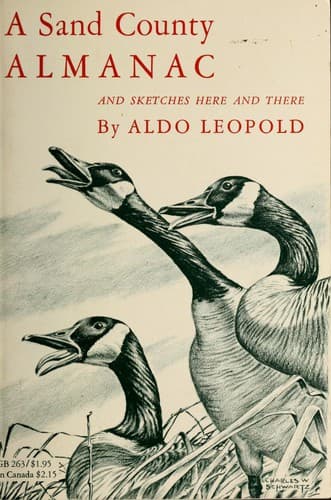
A Sand County Almanac by Aldo Leopold — book cover

A Sand County Almanac

Leopold combines natural observation, ecological thinking, and philosophical reflection into a seasonal record of the land and a durable argument for an ethic of stewardship.

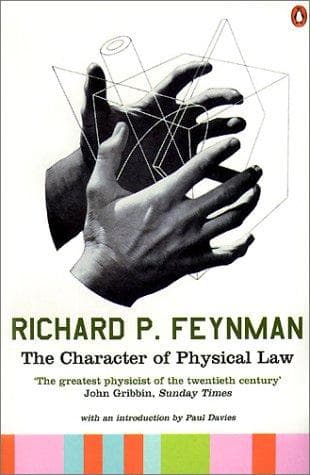
The Character of Physical Law by Richard Feynman — book cover

The Character of Physical Law

Feynman's Messenger Lectures on the underlying patterns of physics: symmetry, conservation, gravitation, probability, and the gap between elegant mathematical law and messy human intuition. A compact explanation of what physicists mean by a law of nature.

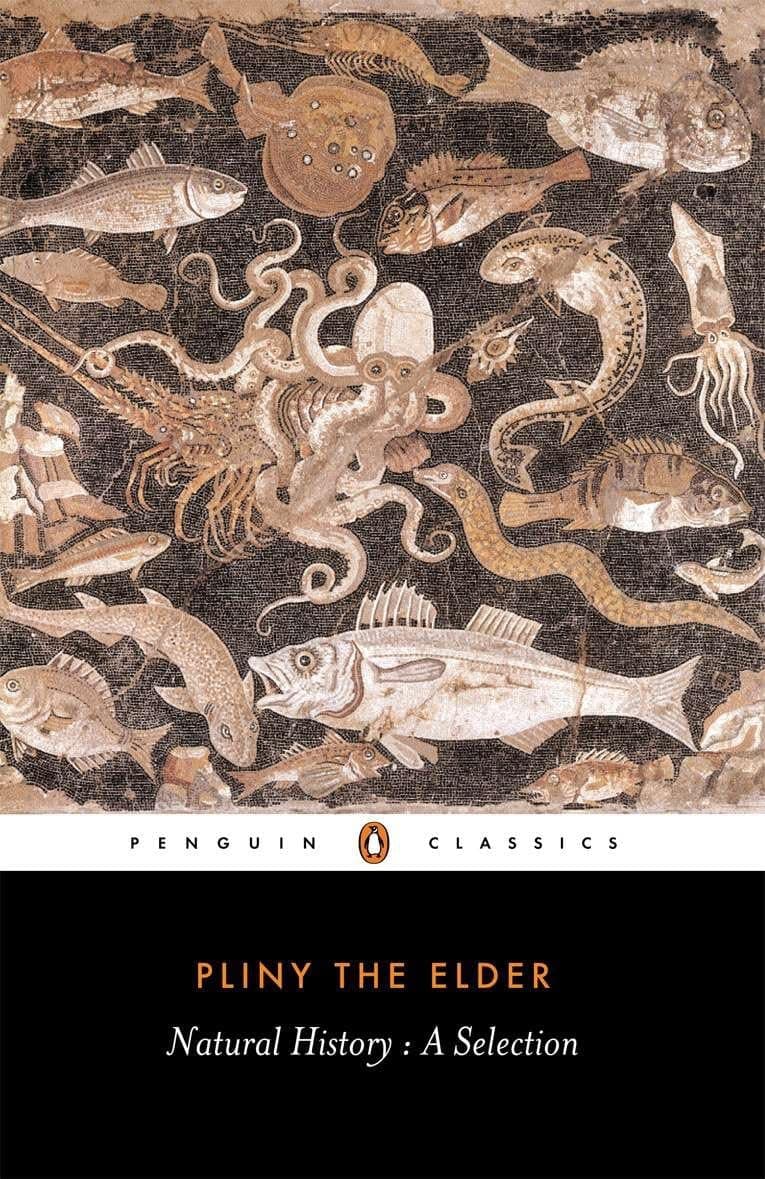
Natural History by Pliny the Elder — book cover

Natural History

An encyclopaedic survey of the ancient world's knowledge across astronomy, geography, botany, zoology, medicine, and art — 37 books compiled by Rome's most industrious scholar.

Relativity: The Special and General Theory by Albert Einstein — book cover

Relativity: The Special and General Theory

Einstein's own account of the revolution he had set in motion, written for the educated non-specialist. Few documents in intellectual history are simultaneously as consequential and as readable. The universe described here — curved spacetime, mass-energy equivalence — is the universe we actually inhabit.

Who We Are and How We Got Here by David Reich — book cover

Who We Are and How We Got Here

A landmark account of the ancient DNA revolution, revealing how the analysis of prehistoric human genomes has overturned our understanding of human migration, mixture, and prehistory.

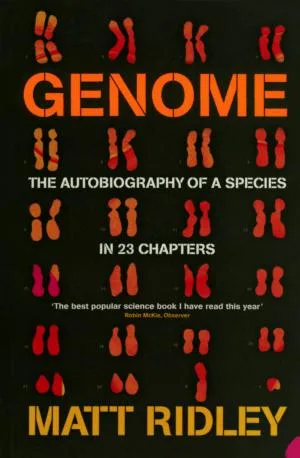
Genome by Matt Ridley — book cover

Genome

A tour of the human genome, one chapter per chromosome, written at the moment the Human Genome Project was completing. The most readable introduction to molecular biology and what the genomic revolution means for medicine, identity, and free will.

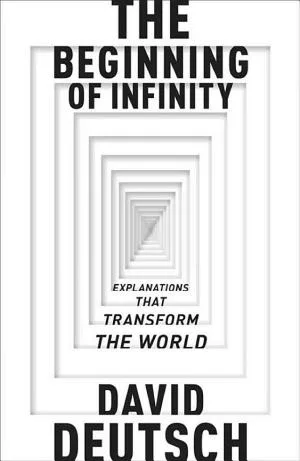
The Beginning of Infinity by David Deutsch — book cover

The Beginning of Infinity

A sweeping argument that all progress — moral, scientific, political, artistic — flows from a single source: the capacity to create explanatory knowledge. Deutsch argues that human understanding is literally infinite in reach, and that the Enlightenment was just the beginning.

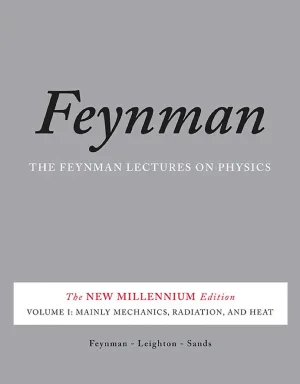
The Feynman Lectures on Physics by Richard P. Feynman — book cover

The Feynman Lectures on Physics

The transcribed lectures of the Nobel laureate physicist at Caltech, 1961–1963. The most beloved physics text ever written.

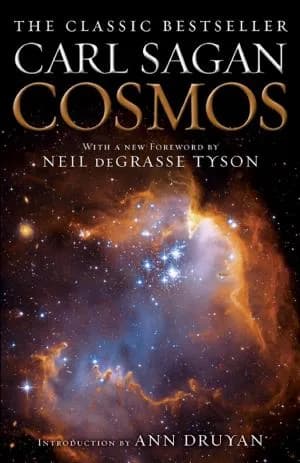
Cosmos by Carl Sagan — book cover

Cosmos

A personal voyage through the universe, from the Big Bang to the search for extraterrestrial intelligence. The companion book to the landmark TV series.

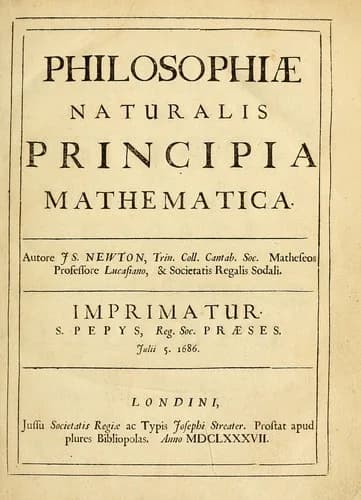
Principia Mathematica by Isaac Newton — book cover

Principia Mathematica

Newton's masterwork presenting the laws of motion and universal gravitation. The founding document of classical physics.

On the Origin of Species by Charles Darwin — book cover

On the Origin of Species

Darwin's presentation of the theory of evolution by natural selection. The most important scientific book ever written.

Frequently Asked

Should I read original scientific texts if I can read a textbook instead?

Yes. Primary scientific texts reveal the thinking process behind discoveries in a way that textbooks never can. Reading Darwin, Newton, or Faraday shows you how these minds moved — which is often more valuable than the facts themselves.

What is the most Lindy science book?

Euclid's Elements, written around 300 BC, may be the most read scientific text in human history after the Bible. It was the standard mathematics textbook in the Western world for over 2,000 years.

Other Collections