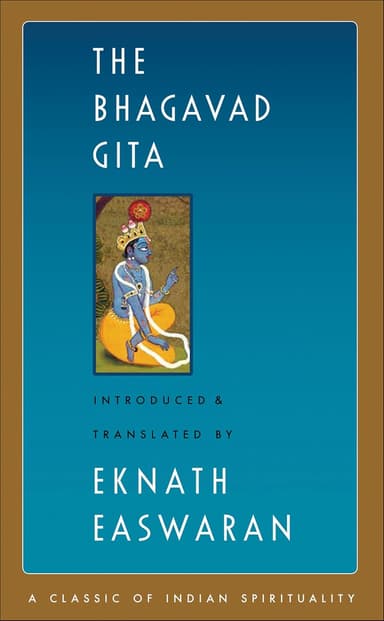
The Bhagavad Gita
VyasaPerhaps the most practically read text in Hindu philosophy.
“You have a right to perform your prescribed duty, but you are not entitled to the fruits of action. Never consider yourself the cause of the results of your activities, and never be attached to not doing your duty.”
— Vyasa
Why It's Lindy
Perhaps the most practically read text in Hindu philosophy. Thoreau, Emerson, Schopenhauer, and Oppenheimer each acknowledged its influence. Two and a half millennia old and still vivid.
About This Volume
Set on the battlefield of Kurukshetra, the Bhagavad Gita is a dialogue between the warrior Arjuna and his charioteer Krishna — who is revealed to be an avatar of Vishnu. As Arjuna hesitates before battle, Krishna teaches him the nature of duty, action without attachment, devotion, and the eternal self. In 700 verses, it addresses the fundamental questions of human existence.
Frequently Asked
Why should I read The Bhagavad Gita?
Perhaps the most practically read text in Hindu philosophy. Thoreau, Emerson, Schopenhauer, and Oppenheimer each acknowledged its influence. Two and a half millennia old and still vivid.
What is The Bhagavad Gita about?
Set on the battlefield of Kurukshetra, the Bhagavad Gita is a dialogue between the warrior Arjuna and his charioteer Krishna — who is revealed to be an avatar of Vishnu. As Arjuna hesitates before battle, Krishna teaches him the nature of duty, action without attachment, devotion, and the eternal self. In 700 verses, it addresses the fundamental questions of human existence.